How to Choose the Right Brochure for Your Business
Your customers are surrounded by digital messages – emails, ads, social posts and notifications – all competing for their attention. If you want to win the competition, a printed brochure creates a physical, tactile experience they can pick up, explore, keep and share. Research has found that print takes 21% less mental effort to understand and delivers 70% higher brand recall than digital advertising. Because people can hold onto a brochure and return to it, the more your message and brand have more opportunities to be seen, processed and remembered.
Brochures also support the conversations that move business forward. They can help a salesperson explain a service, give an event attendee something useful to take home or allow a customer to compare options and add their own hand-written notes without worrying about wi-fi signals or diminishing batteries.
Print and digital work best when they work together. Add a simple QR code and your brochure suddenly becomes a direct path to anywhere online – a product page, video, appointment calendar, online store, quote request or virtual tour.
The printed piece starts the conversation, and the online experience helps the reader continue it.
How do you choose the right brochure for your business?
Start with three questions:
- What does the brochure need to accomplish?
- How much information does it need to communicate?
- Where and how will people receive it?
Your answers will guide your choice of format, fold, paper and finish.
Match the brochure to its purpose
Before choosing a fold, decide how the brochure will support your marketing or sales process.
A real estate professional might use a brochure to present a property and direct prospective buyers to a virtual tour. A contractor could showcase services and completed projects, then invite readers to scan a QR code for an estimate. A retailer might promote a seasonal collection and link customers to the online store or loyalty program.
Knowing what you want your brochure to accomplishwill help determine how much space you need, how the information should flow, and which format will best achieve your goal.
Brochure formats at a glance
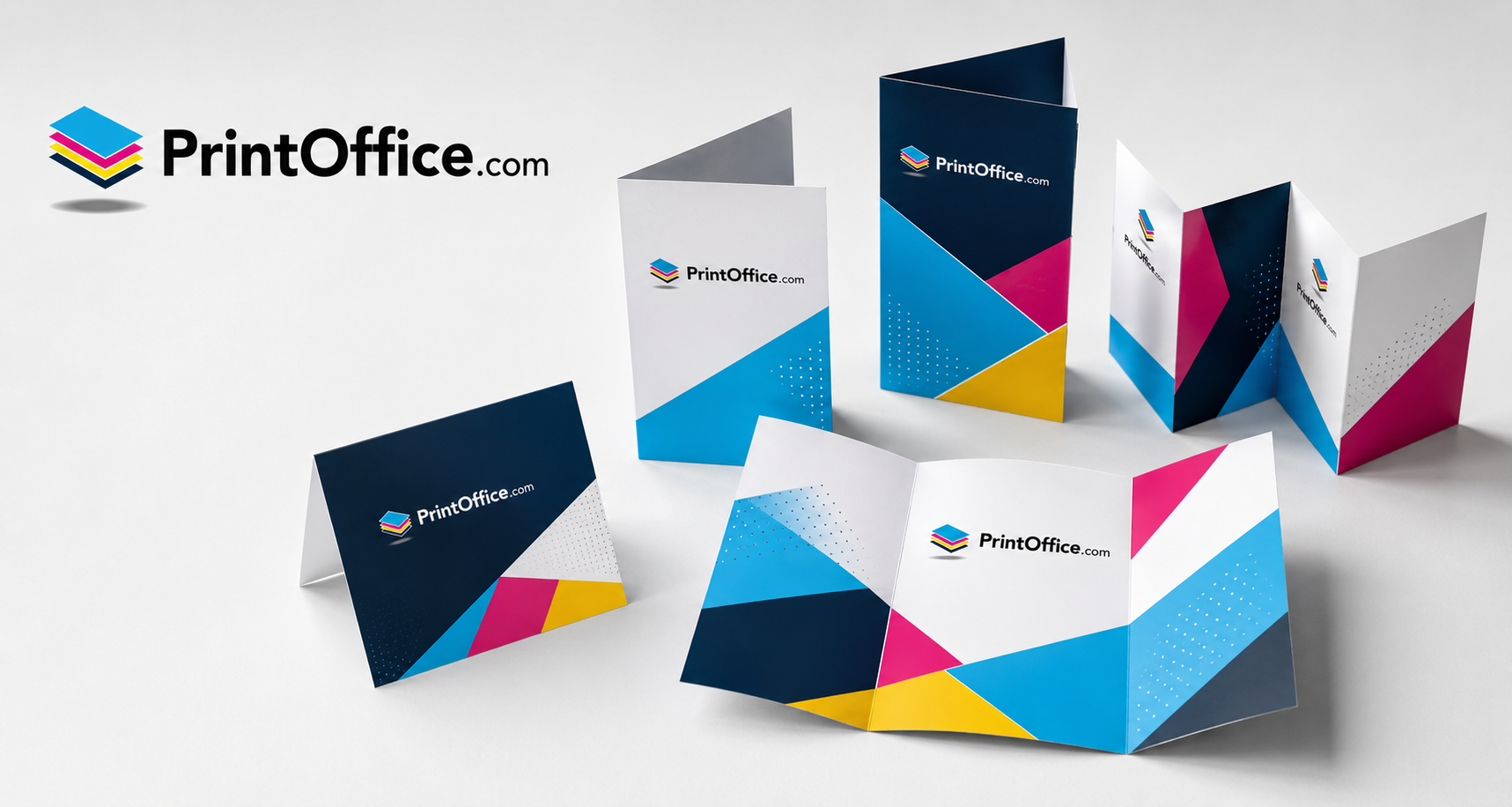
Brochure format | Best suited for | Example |
Half-fold | Company overviews and image-led presentations | An interior designer’s services and portfolio |
Tri-fold | Service details and general marketing | A contractor’s service overview |
Z-fold | Processes and sequential information | A law firm explaining the stages of a legal process |
Gate fold | Visual reveals and premium presentations | A featured real estate property |
Accordion fold | Timelines, maps and multi-step content | A travel itinerary |
Specialty fold | Detailed or distinctive campaigns | A retailer presenting a product collection |
Half-fold brochures: simple and visual
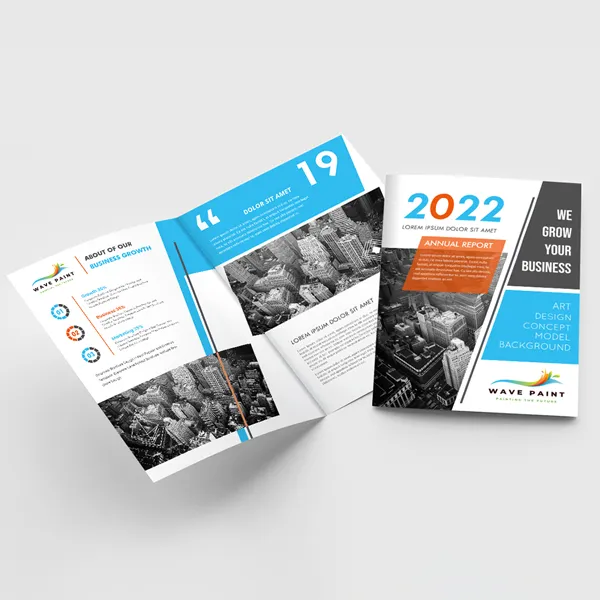
A half-fold brochure is folded once down the middle, creating four large panels. Its straightforward layout provides room for strong photography, longer sections of copy and a large interior spread.
This format works well for company profiles, product introductions, menus, presentations and other focused stories.
An interior designer, for example, could use the cover for a strong project image, the interior for portfolio photography and the back panel for contact information with a QR code leading to more work online.
Choose a half-fold when you want:
- Larger panels for images
- A simple reading sequence
- Space for one focused story
- A format suited to meetings, events or direct mail inserts
Tri-fold brochures: compact and versatile
 A tri-fold brochure creates six panels that can each carry a different part of the message. It’s useful for organizing several services, answering common questions or guiding readers through a short process.
Its compact size also makes it easy to place in brochure racks, sales kits and event displays.
A contractor could dedicate separate panels to renovations, repairs and maintenance, then use the final panel for testimonials and a QR code leading to a quote request. A financial services company could introduce its services, address common questions and invite readers to schedule an appointment.
Choose a tri-fold when you want:
- Defined sections for different topics
- A compact, familiar format
- A clear beginning, middle and end
- A brochure that’s easy to display and distribute
Z-fold brochures: ideal for a sequence
 A Z-fold brochure also creates six panels, but it opens in a zigzag pattern. Readers can view each panel separately or open the brochure into one continuous spread.
That structure makes it a useful choice for timelines, instructions, comparisons and stories that unfold in a specific order.
A law firm could use a Z-fold to explain the stages of a legal process. A contractor could show how a project progresses from consultation through completion. A financial advisor could outline a step-by-step planning process and link readers to an online assessment.
Choose a Z-fold when:
- The order of the information matters
- Content should flow across several panels
- Readers need to compare sections
- A timeline or diagram is central to the message
Specialty folds: designed to create interest
 Specialty folds add movement and discovery to the experience of reading a brochure.
A gate fold opens from the center, making it effective for a visual reveal. A real estate company could use it to unveil a featured property, while a retailer could reveal a new collection.
An accordion fold opens across several connected panels. A travel advisor could use it for a day-by-day itinerary, with a QR code linking to current availability or a booking inquiry.
Roll folds, French folds and double parallel folds provide additional panels for more detailed information. They can work well for product collections, educational content or multi-step services.
Specialty folds require careful artwork preparation. Use the design guideline for your chosen size and fold so that each panel appears in the correct position.
Explore specialty-fold brochures.
Consider paper, finish and distribution
Your brochure’s paper and finish should support how it will be used.
A brochure featuring photography may benefit from a stock and coating that showcase color and detail. A piece customers need to write on may require an uncoated surface, whereas a menu may need tear, moisture, or germ-resistant paper.
Also consider whether the finished brochure must fit into a display rack, presentation folder or direct mail package.A brochure that will be handled repeatedly may have different requirements than one mailed inside an envelope.
PrintOffice.com offers multiple sizes, stocks, coatings, quantities and folding options. Review the available configurations before preparing your final artwork.
Ready to create your brochure?
The right brochure gives your message structure, supports your sales and marketing efforts and guides readers toward their next step.
Start with the purpose, audience and distribution method. Then choose the format that presents the information clearly and reflects how you want customers to experience your business.
Explore brochure options and start your order with PrintOffice.com.